

Solar Hub
The SEAI solar grant: before you apply
Published 20 May 2026 Updated By Infinite Energy
Check the grant amount, your home’s eligibility and the steps from approval to payment. A quote or roof survey is not grant approval.
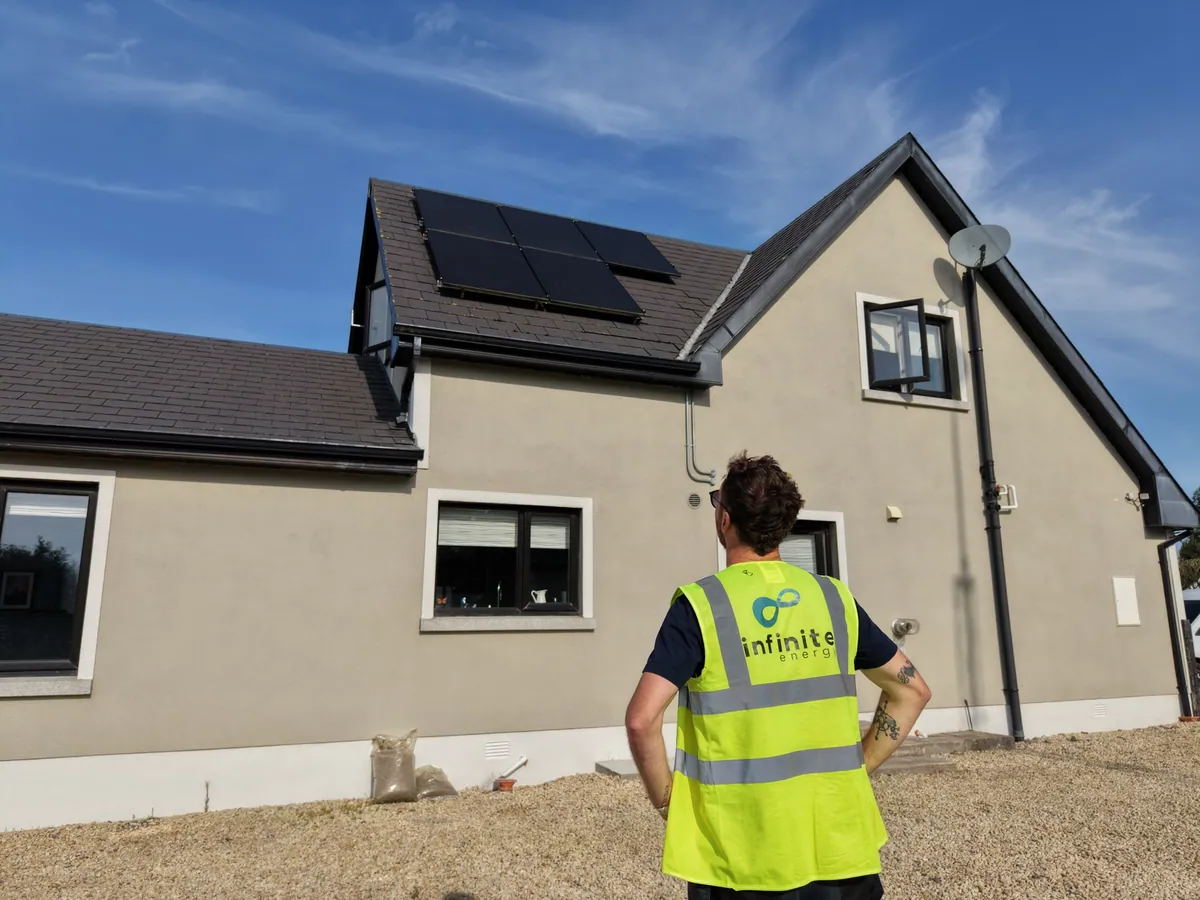
The standard home Solar Electricity Grant offers up to €1,800 in 2026. It is support towards an eligible installation, not an automatic discount for every home. This guide covers the individual homeowner route.
What can you apply for?
SEAI allows €700 per kWp for the first 2kWp and €200 per additional kWp up to 4kWp. It pays proportionately for part of a kWp. The ceiling is €1,800, with no further grant for capacity above 4kWp.
The standard criteria require a home in the Republic of Ireland, built and occupied before 1 January 2021, with an MPRN and no previous solar PV funding at that MPRN. Homeowners and private landlords can apply.
Different arrangements can apply to homes supported under the defective concrete blocks remediation scheme. Ask SEAI about your situation before assuming the standard criteria exclude you. Owner Management Companies and Approved Housing Bodies should also check their own application process.
Get the offer before committing
Choose a company active on SEAI’s Solar PV Company register, agree the scope and apply for the grant. Wait for the Letter of Offer before buying equipment or starting installation work. Earlier expenditure can invalidate the grant.
Check that the offer names the correct company, measure, size and amount. Ask SEAI about any change before work starts. Registration is not an SEAI warranty of the installation.
The registered installer signs the Declaration of Works. Electrical work must be carried out by a Safe Electric Registered Electrical Contractor. The separate ESB Networks connection process also needs to be completed at the correct stage.
The grant is not paid on installation day
You have eight months from approval to complete the works and submit the required documentation. Arrange a BER assessment after the works with a registered assessor. This is required for the grant, not an optional extra.
The company submits the completion evidence; the assessor publishes the BER. SEAI reviews the claim and may inspect the work before paying the nominated bank account. Do not plan around a guaranteed payment date.
Know who is sending what
Ask for confirmation that the required declarations, electrical certification, connection record, invoice, photographs and published BER are in place. Keep your safety file, manuals and warranties too. Handover documents do not replace the grant claim.
Make the quote easy to compare
Our advice is to compare the full installed price first, then the grant assumption and the amount you would pay if it is awarded. Ask which costs are included, how the BER is arranged and how payment works while the grant is pending.
A roof survey helps establish the proposed system. It does not apply for the grant, confirm your eligibility or guarantee payment. Read the current SEAI conditions before you commit.
When you are ready
Check the plan for your home.
A solar consultant can assess the roof and electrical setup and explain the proposed system. The roof survey is free, with no obligation. Grant approval, grid requirements and export terms remain separate checks.