

Solar Hub
Solar panels and home batteries
Published 19 May 2026 Updated By Infinite Energy · About 4 min read
A battery stores electricity for later. Whether it suits your home depends on your electricity use, the system and its cost.
Jump to a section
A simple example
From daylight to evening
Use electricity as it is generated, with available surplus stored for another time.
Use solar electricity during the day
Panels generate electricity in daylight. Appliances can use it while it is available.
Store available surplus
When generation is greater than use, a battery may store some of the available surplus.
Use stored electricity later
The battery can discharge later when the home needs electricity. The grid can supply a shortfall.
Some systems can charge a battery from the grid. Whether that is available or useful depends on the specified system, its settings and the electricity tariff.
Solar PV and battery storage are closely linked, but they are not the same decision.
Solar panels generate electricity during daylight hours. A battery can store some surplus electricity so it can be used later, often in the evening when household demand rises.
A battery can be useful where there is daytime surplus and demand later on. It also adds cost and loses some energy while charging and discharging. Compare a proposal for solar alone with one that includes storage, using the same electricity use and tariff assumptions.
Solar generation happens during the day
Solar PV output rises and falls with daylight.
If a home uses electricity during the day, more of that generation can be used directly. If the home is empty during the day, some electricity may be exported unless demand is shifted or battery storage is included.
This is why usage matters. A household with daytime demand may not need the same battery strategy as a household that uses most electricity in the evening.
What a battery does
A battery stores electricity for later use. It shifts available electricity to another time. It does not create extra solar electricity.
In a solar PV system, that usually means storing surplus daytime generation for evening demand. Backup is separate from ordinary battery storage. Do not assume it is included.
Ask whether backup is included, which circuits it covers, the power limits and any conditions that apply during an outage.
When a battery may make sense
Battery storage is worth considering when the home generates more solar electricity than it can use during the day, evening electricity use is high, the homeowner wants more control over generated energy, future EV charging is being considered, backup options are part of the brief, or the budget allows for storage without compromising installation quality.
Monitoring can help you see generation, storage and household demand, where those features are included.
When a battery may not be the first priority
A battery may not be the best first step if daytime usage is already high, roof generation is modest, budget is tight, you is mainly focused on reducing upfront cost, or future usage is uncertain.
In those cases, the system can sometimes be designed so storage can be considered later. That means choosing products and locations with future compatibility in mind.
Battery sizing matters
A battery should not be chosen by guesswork.
If the battery is too small, it may not store enough useful surplus energy. If it is too large, you may pay for capacity that is not regularly used. The right capacity depends on the solar system, demand pattern, budget and whether backup or EV charging is part of the plan.
A proposal should explain why the battery size has been recommended.
What to compare
| Battery factor | Why it matters |
|---|---|
| Usable capacity | Determines how much energy can be stored. |
| Inverter compatibility | Affects system design and future upgrades. |
| Monitoring | The specified system may show generation, battery use and household demand. |
| Backup capability | Must be clarified before purchase. |
| Expansion options | Useful if energy demand may grow. |
| Warranty | Important for long term confidence. |
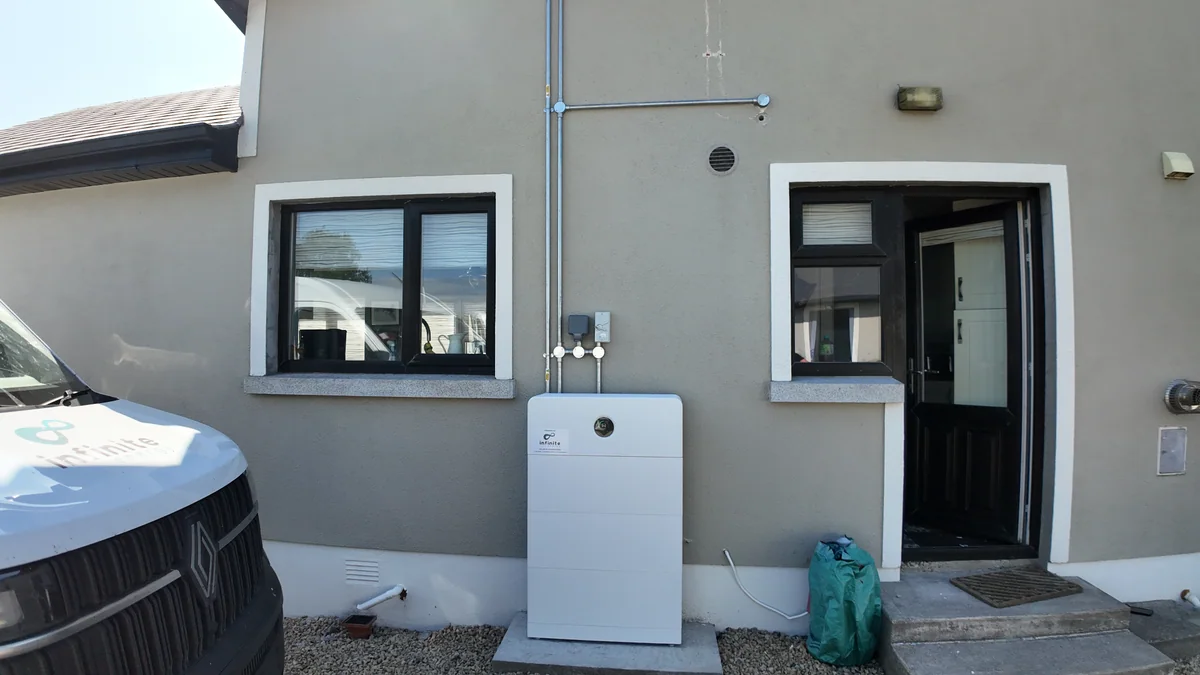
| Location | Affects appearance, access and cable routes. |
| Handover | Helps you understand how the system works. |
Battery storage and EV charging
Battery storage and EV charging can work together, but the relationship should be explained carefully.
Charging a car can add a substantial electricity load. Discuss when the car is at home, its charging needs and how much solar is available before deciding how household storage fits into the plan.
The best plan considers solar generation, home demand, EV charging times and future upgrades together.
Before you decide
Battery storage can be a strong addition to solar PV, but it should be designed around the home rather than sold as a generic bundle.
The right question is not “Do I need a battery?” It is “What would a battery do in this specific home?”
Next step
Explore your next step.
Keep researching or get a guide estimate. You can then request a free roof survey, with no obligation. The survey and electrical review establish the design and final quote.