
Solar Hub
Commercial solar for your business
Published 14 May 2026 Updated By Infinite Energy · About 4 min read
Start with your electricity use. Then check the site, installation requirements and the assumptions behind the proposal.
Jump to a section
Solar may reduce the electricity your business buys from the grid. The useful question is how much you can use on site, at the times you need it, and what the full project will cost.
You do not need to arrive with a panel count. Start with bills, opening hours and what you know about the premises. A commercial solar review can then test what fits.
- Your demandWhen and where electricity is used.
- Your premisesWhat can be installed and maintained safely.
- Your proposalWhat is included and how the figures were calculated.
Bring these to the first meeting
- Electricity bills covering a full year, including units used in kWh rather than only the amount paid.
- Usage data for each half hour, if available, plus opening hours, weekend closures and seasonal changes.
- Known roof issues, planned building work and whether you own or lease the premises.
- Plans that could change demand, such as new machinery, heating or vehicle charging.
If some information is missing, say so. A useful first discussion should identify what still needs to be checked, rather than present a finished design.
Separate generation from what you can use
Panels generate in daylight. A factory running during the day and a building that is quiet at weekends will have different opportunities to use that electricity.
Ask for three separate figures in the proposal. How much electricity is modelled to be generated, how much is expected to be used on site, and how much may be left over. Annual generation equal to your annual demand does not mean your grid bill disappears.
Any export income needs its own connection and tariff assumptions. A savings or payback figure should show the electricity prices, project costs and ongoing costs used in the calculation. Ask how the result changes if those assumptions change.
Agree how the work fits around the business
A large roof is not enough on its own. Ask who will check its condition, structural suitability, access, shading and any planning or connection requirements. If you lease the building, clarify the permissions needed before committing to the work.
The installation plan should identify affected areas, deliveries, roof access and any expected electrical shutdown. Agree how staff, customers and production will be kept informed. Do not assume that installation means no disruption.
Confirm where the inverters and cable routes will go, how equipment will be reached for maintenance and who will provide the safety and handover documents.
Check grant support before work starts
SEAI’s Non-Domestic Microgen Grant covers eligible businesses and other organisations. Support is calculated up to 1,000 kWp, with a published maximum of €162,600. That is a scheme maximum, not the grant every project receives.
SEAI requires the grant offer before work starts. Your installer must also deal with the applicable ESB Networks connection process before installation. Ask who owns each application and what must be in place before a start date is agreed.
Grant support is one input to a business case. Eligibility, the actual award and any funding terms need to be checked for your project.
Ask for a proposal you can compare
- The proposed layout, equipment models and system capacity.
- Generation, use on site and export estimates, with the assumptions shown.
- The full price, payment stages, grant assumptions and any exclusions.
- The installation programme, access arrangements and responsibilities.
- Product and workmanship warranties, monitoring access and aftercare contacts.
- The documents, training and maintenance information provided at handover.
Two quotes with the same panel count may cover different work. Have any missing items explained before comparing the totals.
Look at relevant completed work
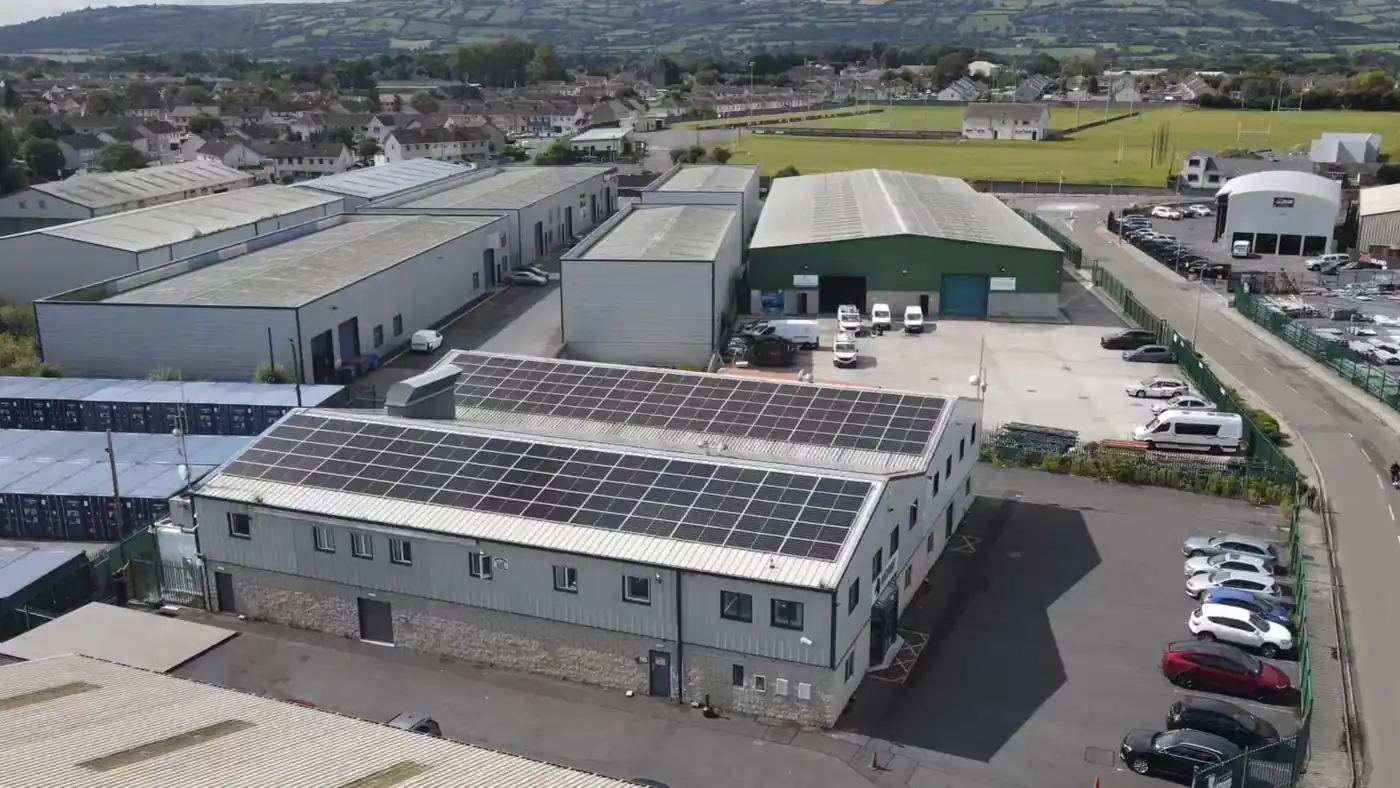
Burnside Eurocyl is our flagship commercial installation, with 990 panels and four Sigenergy inverters. Its film shows the scale of the roof and equipment installation.
Our five commercial project films cover different sites. Use them to ask about experience with premises like yours. The recorded equipment and footage do not establish measured savings for those sites or predict your own results.
Before you decide
Leave the first meeting knowing what could suit the site, what needs investigation and what the next review will cover. A final proposal should follow the site and electrical checks, with assumptions you can take back to the people approving the investment.
Next step
Talk through your site
Discuss your electricity demand, premises and operating constraints. A review of your site is needed before a final proposal.