

Solar Hub
Which roof direction suits solar?
Published 26 May 2026 Updated By Infinite Energy
South is not the only option. East and west change when panels generate, while shade, roof pitch and household use help determine the right layout.
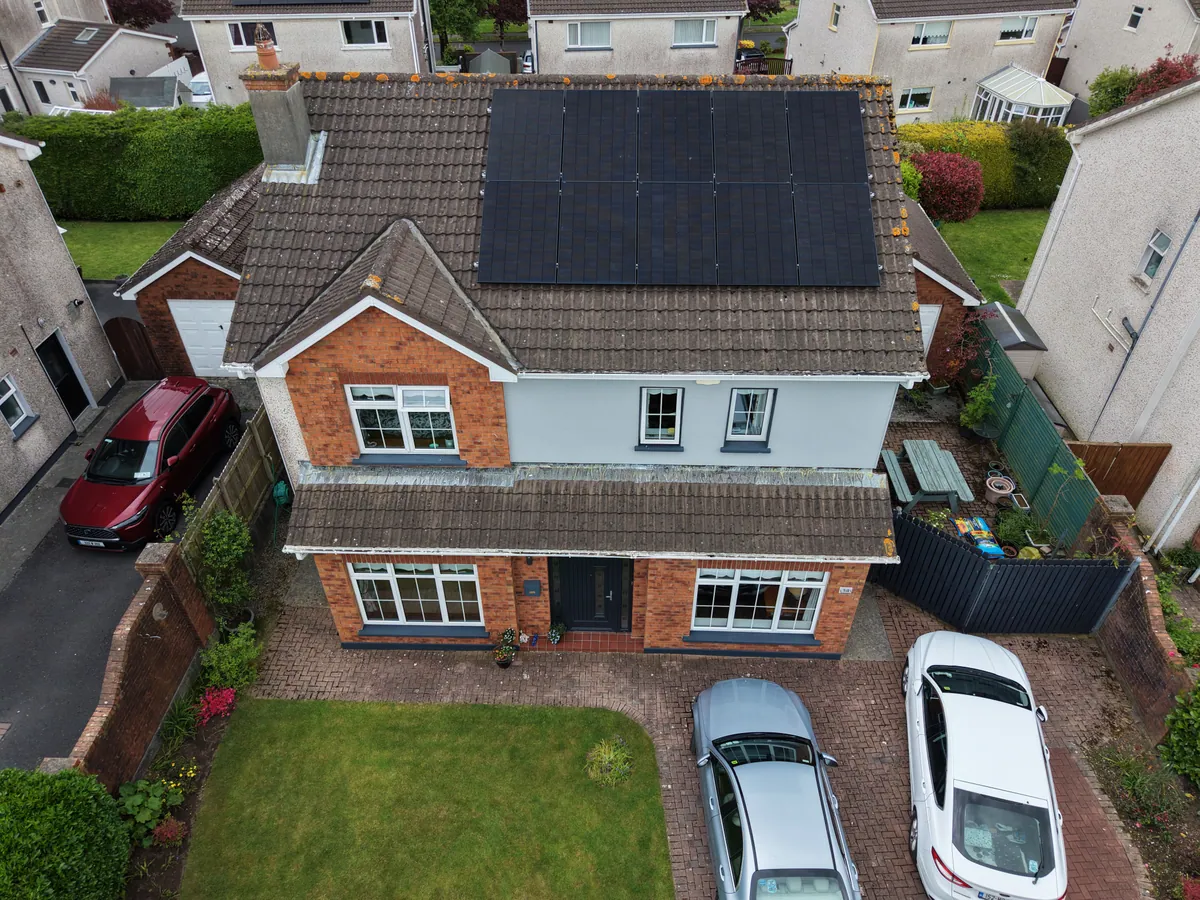
Do not rule out your roof because it does not face south. Ask which sections are usable and how the proposed layout would perform for your home.
Direction changes the daylight pattern
- East Earlier in the day
- South Around the middle of the day
- West Later daylight hours
For otherwise comparable systems, south generally gives more annual generation in Ireland. East or west can shift more output towards earlier or later daylight hours. A layout using both sides spreads generation across the day; it is not a promise of more annual electricity.
Later output does not mean generation after dark. If most electricity is used late in the evening, ask how much of that demand would still come from the grid, with and without a battery.
The compass is only part of the survey
Roof pitch, usable area, condition and shade all need checking. Trees, chimneys and neighbouring buildings can affect a layout. Their effect should be assessed for the site rather than assuming that one direction always wins.
Ask which roof sections were included in the estimate and why. A north facing section needs particular scrutiny; do not treat it as equivalent to the same number of panels facing south. A photograph alone cannot confirm the structure, electrical work or annual output.
The roof suitability guide covers the wider checks. There is no need to climb onto the roof yourself or settle on equipment before the survey.
Compare layouts using the same assumptions
Ask for the proposed panel count and total capacity, estimated annual generation and the basis of any shading allowance. If one option has more panels, comparing its total output with a smaller option does not isolate the effect of direction.
- Electricity use: when is someone at home, and when do the main appliances run?
- Energy split: how much generation is expected to be used, stored or exported?
- Costs: what changes in the installed price, equipment and work between layouts?
- Assumptions: are the same demand, tariff and grant figures used in each comparison?
Compare any battery option separately, including its cost and losses. More solar used in the home does not automatically mean the shortest payback. Our payback guide explains how to question that calculation.
You can start with a guide estimate without contact details. A roof survey is needed to confirm the layout and the work before a final proposal.
Take a closer look at your roof.
A solar consultant can check the roof and electrical setup and explain a proposal for your home. The roof survey is free, with no obligation to go ahead.